
By Dean Stetson
This article was written by Dean Stetson and adapted for web presentation by the Newport Historical Society. It recounts the tragic death and lasting legacy of Newport native and financier Austin Corbin.
Originally printed in the New Hampshire Argus and Spectator on Friday, June 12, 1896, the obituary of Austin Corbin has been reprinted many times due to its vivid detail and comprehensive view of Corbin’s life, career, and untimely death. The tragic accident, witnessed by family members, and its aftermath captured the attention of the entire Newport community and beyond. What follows is a reprint of that original obituary with added historical context.
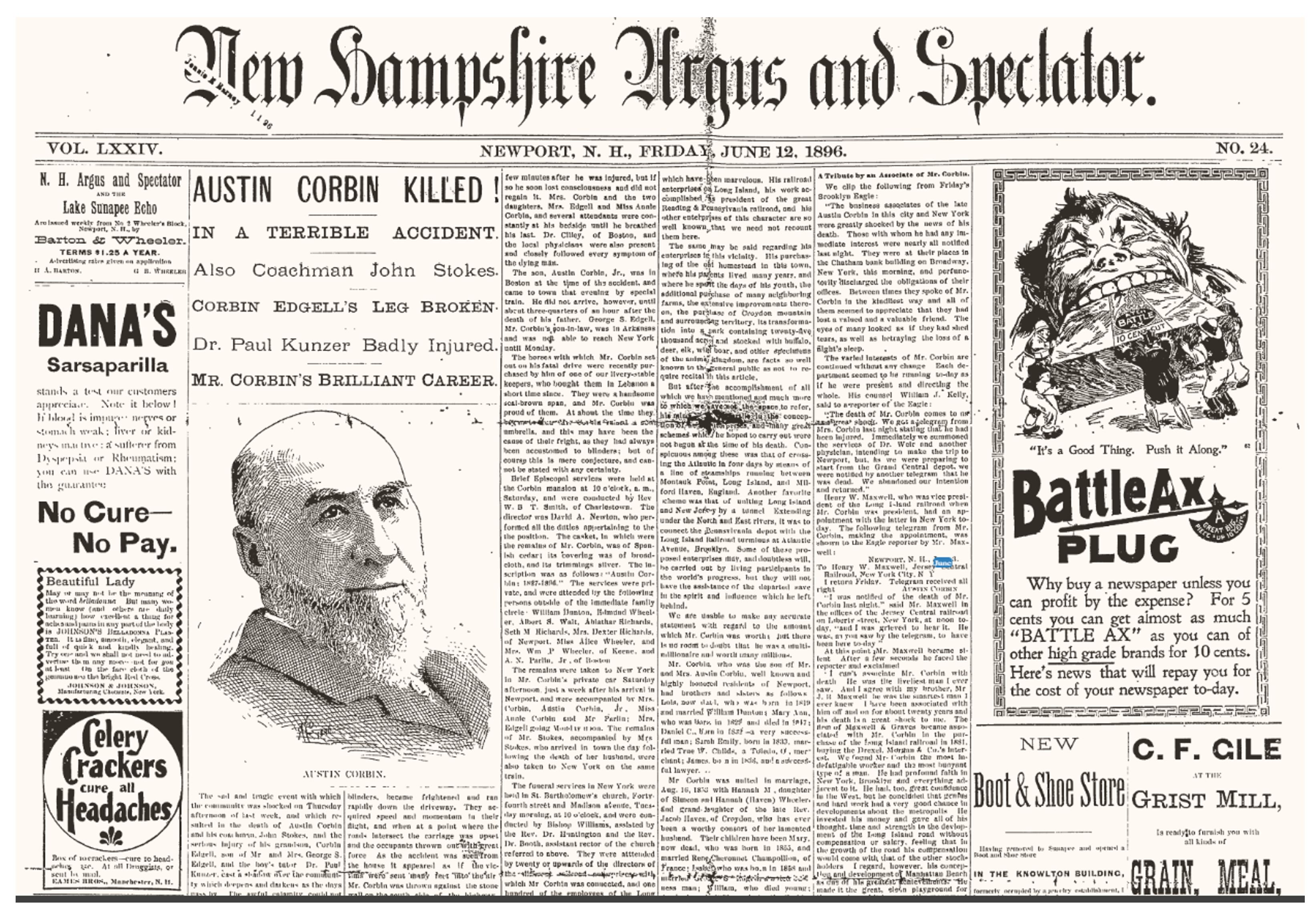
AUSTIN CORBIN KILLED!
In a Terrible Accident
Also Coachman John Stokes
Corbin Edgell’s Leg Broken
Dr. Paul Kunzer Badly Injured
Mr. Corbin’s Brilliant Career
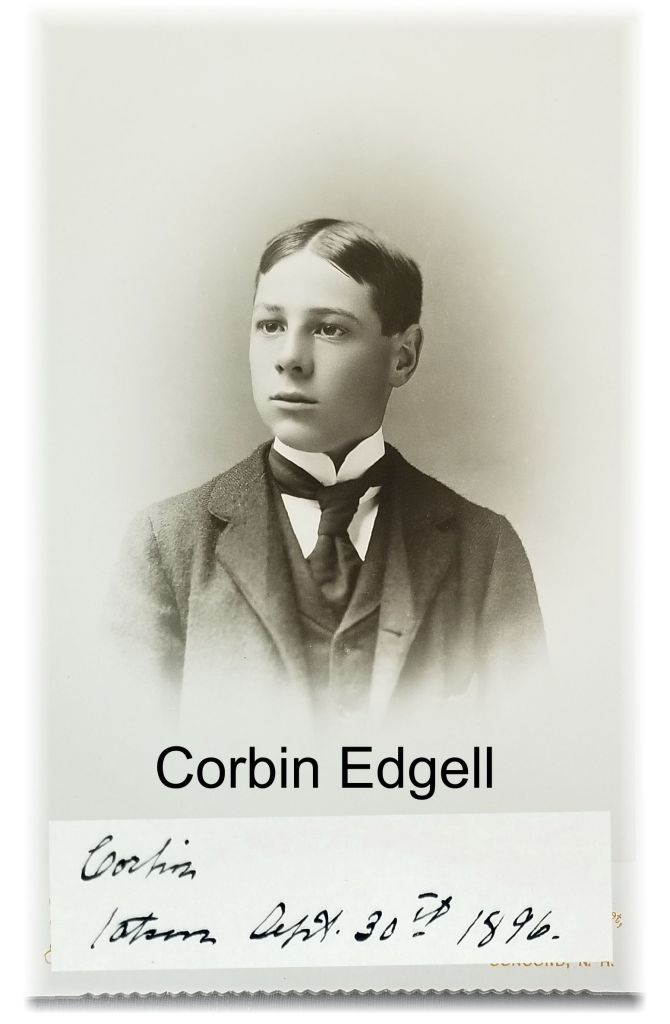
The sad and tragic event which shocked the community on Thursday afternoon, June 4, 1896, resulted in the death of Austin Corbin and his coachman, John Stokes, and the serious injury of his grandson, Corbin Edgell, and the boy’s tutor, Dr. Paul Kunzer.
The accident occurred just after the party had departed on a drive to Governor’s Pond in a two-seated open carriage. The horses, newly harnessed and without blinders, were startled and bolted down the driveway. The carriage overturned at high speed at a junction where two estate roads met the main highway.
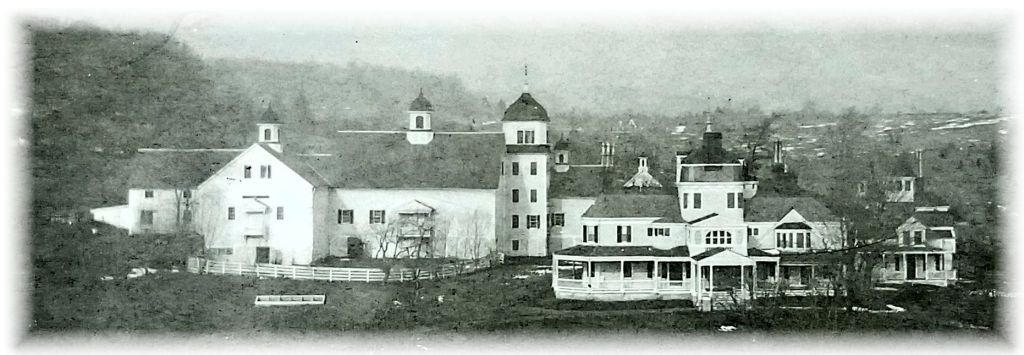
Mr. Corbin was thrown violently against a stone wall; his injuries were severe and ultimately fatal. John Stokes suffered fatal trauma, while young Edgell and Dr. Kunzer sustained compound fractures. Despite the immediate medical attention from multiple doctors—including specialists rushed in by train—Corbin succumbed to his injuries at 9:45 PM the same day.
Funeral and Burial
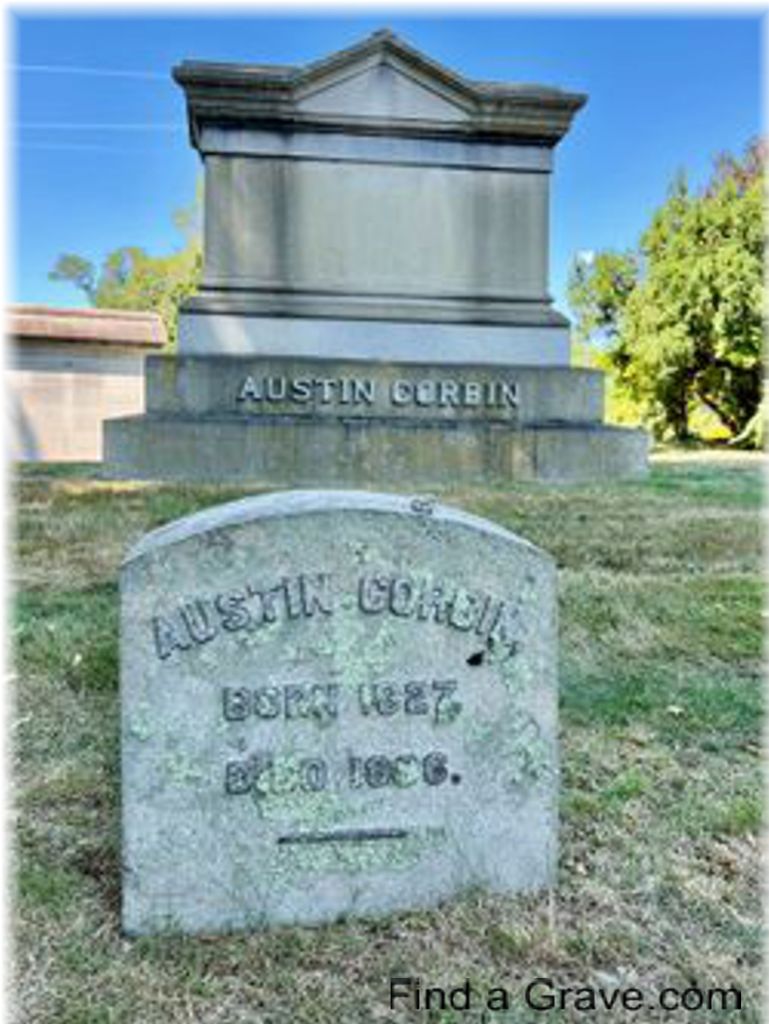
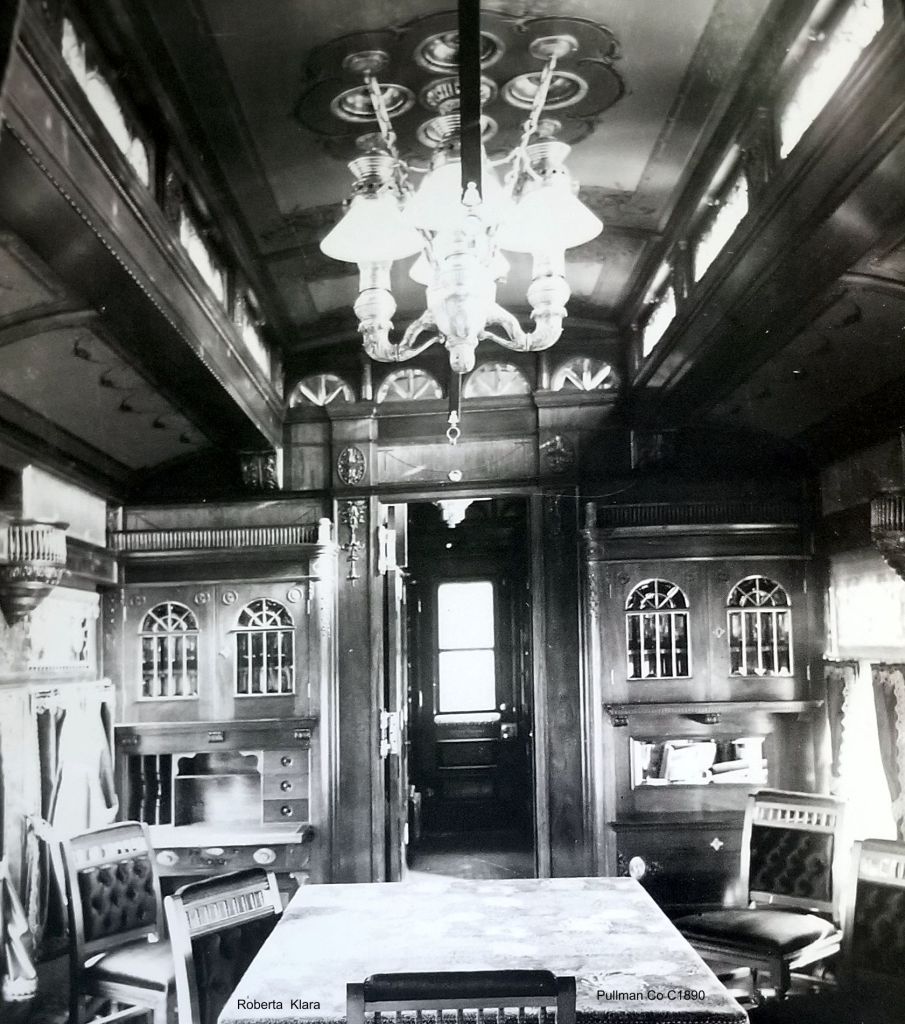
A brief Episcopal service was held at the Corbin mansion, led by Rev. W. B. T. Smith. The casket was of Spanish cedar with silver fittings. Corbin’s remains were transported in his private rail car to New York, accompanied by family. Funeral services were held at St. Bartholomew’s Church, New York City, with notable figures in attendance, including Cornelius Vanderbilt and other leaders in the railroad industry. He was laid to rest in the family vault at Woodlawn Cemetery.
A Life of Vision and Achievement
Born July 11, 1827, in Newport, NH, Corbin studied law under Chief Justice Edmund L. Cushing and Gov. Ralph Metcalf. He graduated from Harvard Law School in 1849, practiced law in Newport and Iowa, and entered banking in 1854. By 1865, he had formed the Corbin Banking Company in New York, which became a nationally respected institution.
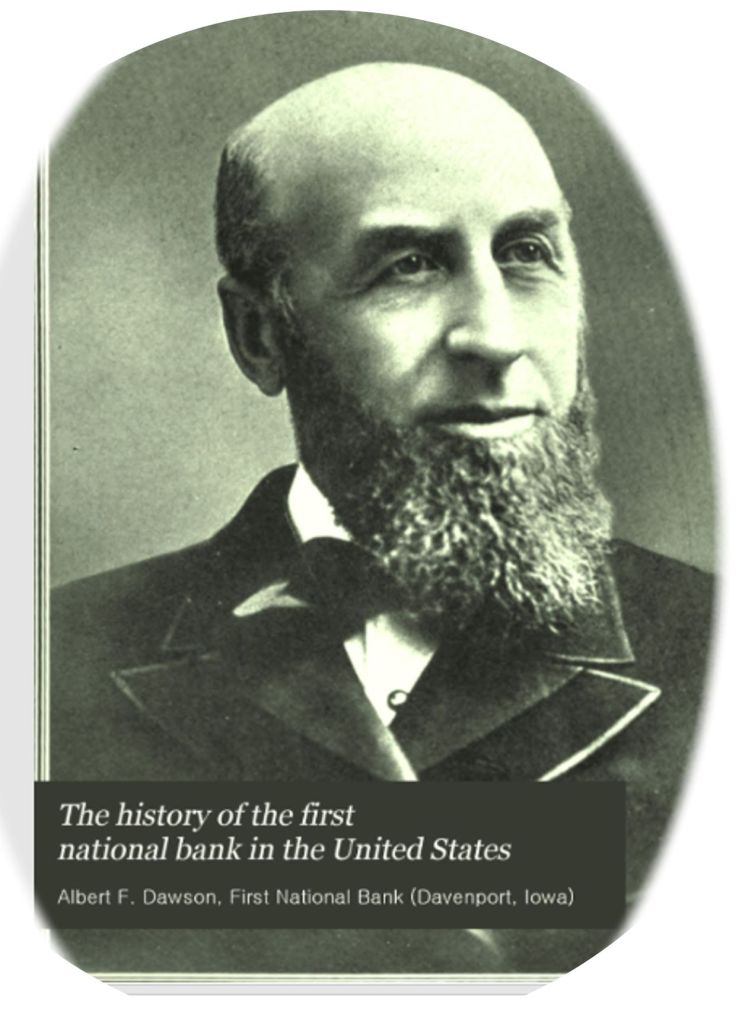
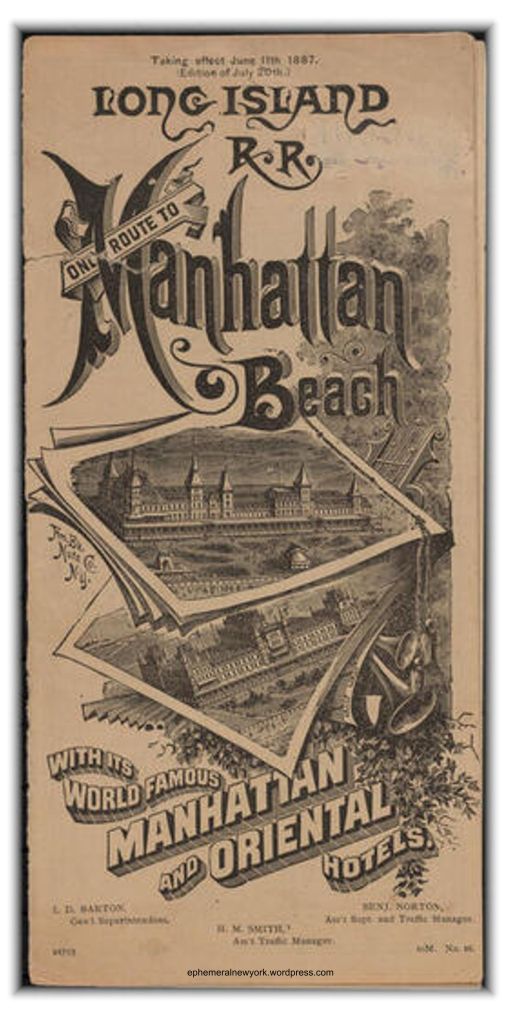
His ventures included land speculation, mortgages, and vast railroad enterprises. Among his best-known projects was the transformation of Coney Island’s Manhattan Beach into a premier seaside resort, complete with grand hotels and his own railroad to deliver city dwellers to the shore.
Later, Corbin returned to Newport and purchased his family homestead. He expanded it into a sprawling estate, acquiring surrounding farms and Croydon Mountain, which he turned into a private game park populated with buffalo, elk, and boar.
Unrealized Ambitions
At the time of his death, Corbin had even greater plans in development. He envisioned an express steamship route between Long Island and England, and a tunnel connecting Long Island and New Jersey beneath the East and North rivers. These grand projects died with him, though they may have inspired later achievements by others.
Corbin was regarded as a man of immense energy, intellect, and influence. He left behind a family of five children, several of whom married into prominent families. His wife, Hannah, was noted as a strong and supportive partner.
Legacy
Austin Corbin’s estimated worth at the time of his death was $40 million. But beyond wealth, his true legacy lies in the impact of his ideas and developments—from financial systems to transportation, from luxury tourism to conservation.
His life and untimely death remain woven into the history of Newport. As visitors walk the grounds of the Corbin Estate today, they walk not only through the remnants of wealth, but through the ambitions and dreams of a man whose life bridged rural New Hampshire and the heights of American enterprise.



📄 Download Dean Stetson’s original article as submitted
Click here to view the unedited historical document (PDF)
Prepared and adapted for online publication by the Newport Historical Society, 2025.
For questions or to share your own stories about the Corbin Estate, please contact the Newport Historical Society.