
As we celebrate the final days of the 110th Newport Winter Carnival, it’s fun to look back at some of the more adventurous events that have appeared over the years. Among the most striking are the images of skijoring, captured in our archives from both 1917 and 2008 — nearly a century apart, yet equally full of energy.
Skijoring is a winter sport in which a skier is pulled across the snow by a horse, a dog team, or sometimes a motor vehicle. The skier holds a rope or harness, steering and balancing with surprising finesse. The word comes from the Norwegian skikjøring, meaning “ski driving.” What began as a practical mode of winter travel in Scandinavia evolved into a competitive sport in the early 1900s and even appeared as a demonstration event at the 1928 Winter Olympics.
These glimpses from Newport’s past show how Carnival traditions have always blended creativity, athleticism, and a bit of daring. This post is part of a five‑day series highlighting pieces of Winter Carnival history. Tomorrow, we’ll explore another artifact from the early years that helped shape the festival we know and love.
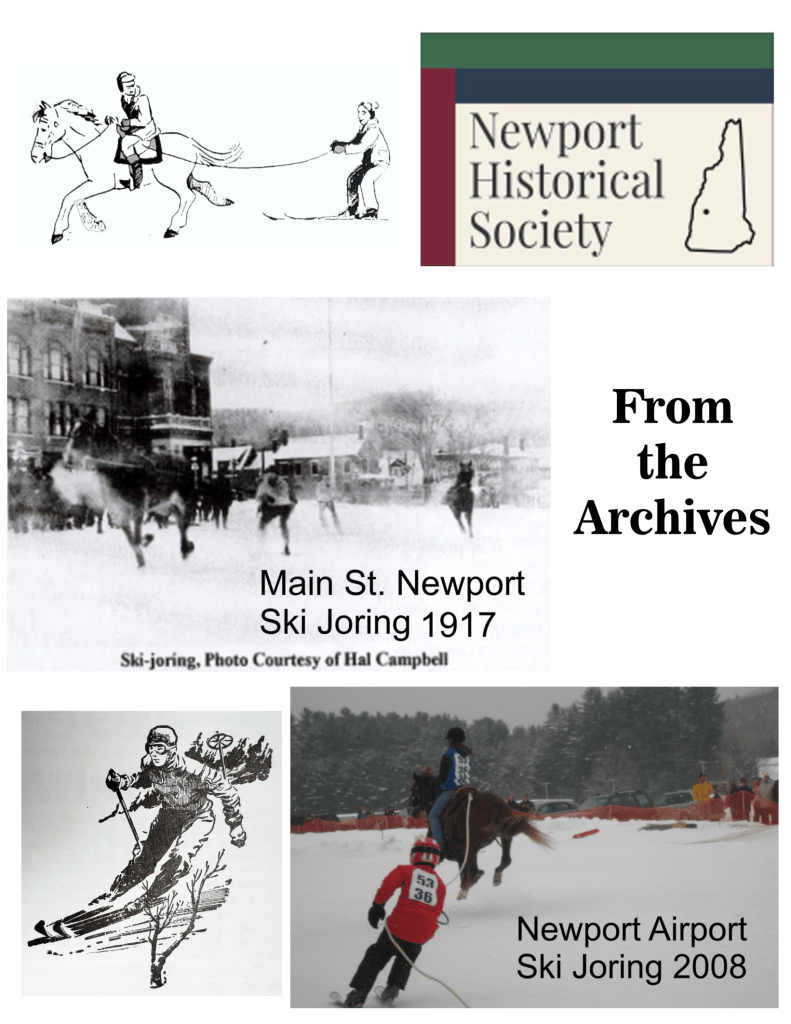
Image courtesy of the Newport Historical Society archives

Support Newport, NH nonprofit organizations and purchase your America 250 gear. A portion of your purchase goes back into the community. Shop Now! Click Here

Discover more from Newport, NH Historical Society
Subscribe to get the latest posts sent to your email.